Municipal EU funding agency
Danube Region portal with an intranet for every participating country
An EU macro-regional strategy has two audiences: the public, and the countries and organisations that carry it out. The portal serves both — a public website and an intranet with its own permission management, on one platform.
The brief
Many countries and organisations work on the Danube Region Strategy at once. The public needs a website it can follow; the participants need a shared workspace in which each body sees and edits exactly what concerns it.
The solution
A public website and an intranet on the same platform, extended with modules developed for it. A permission system of its own decides which country and which organisation may see and change which areas.
The outcome
Public content and the participants' collaboration live on one platform — and who may see what is a question of permissions, not of a separate installation.
A closer look
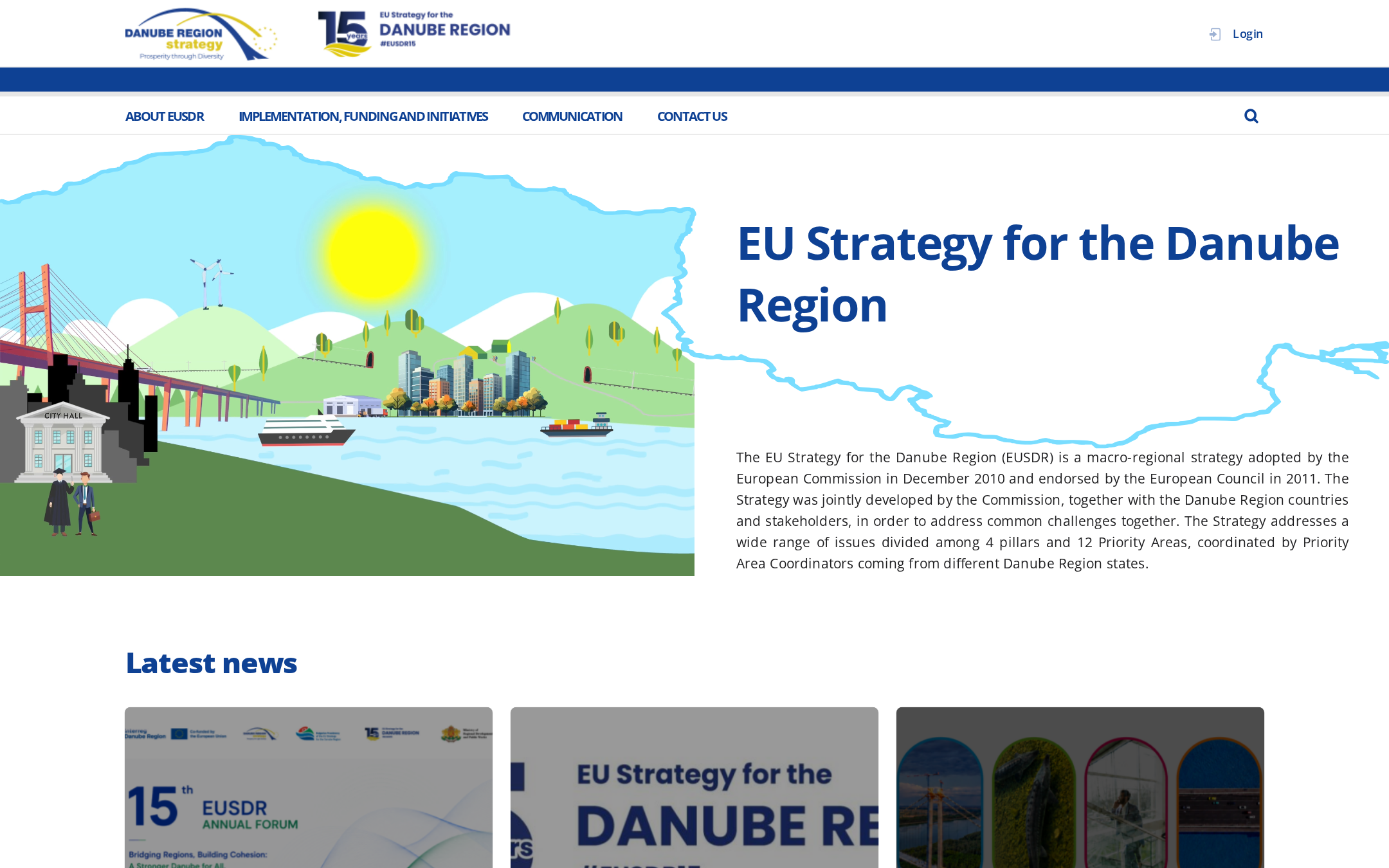
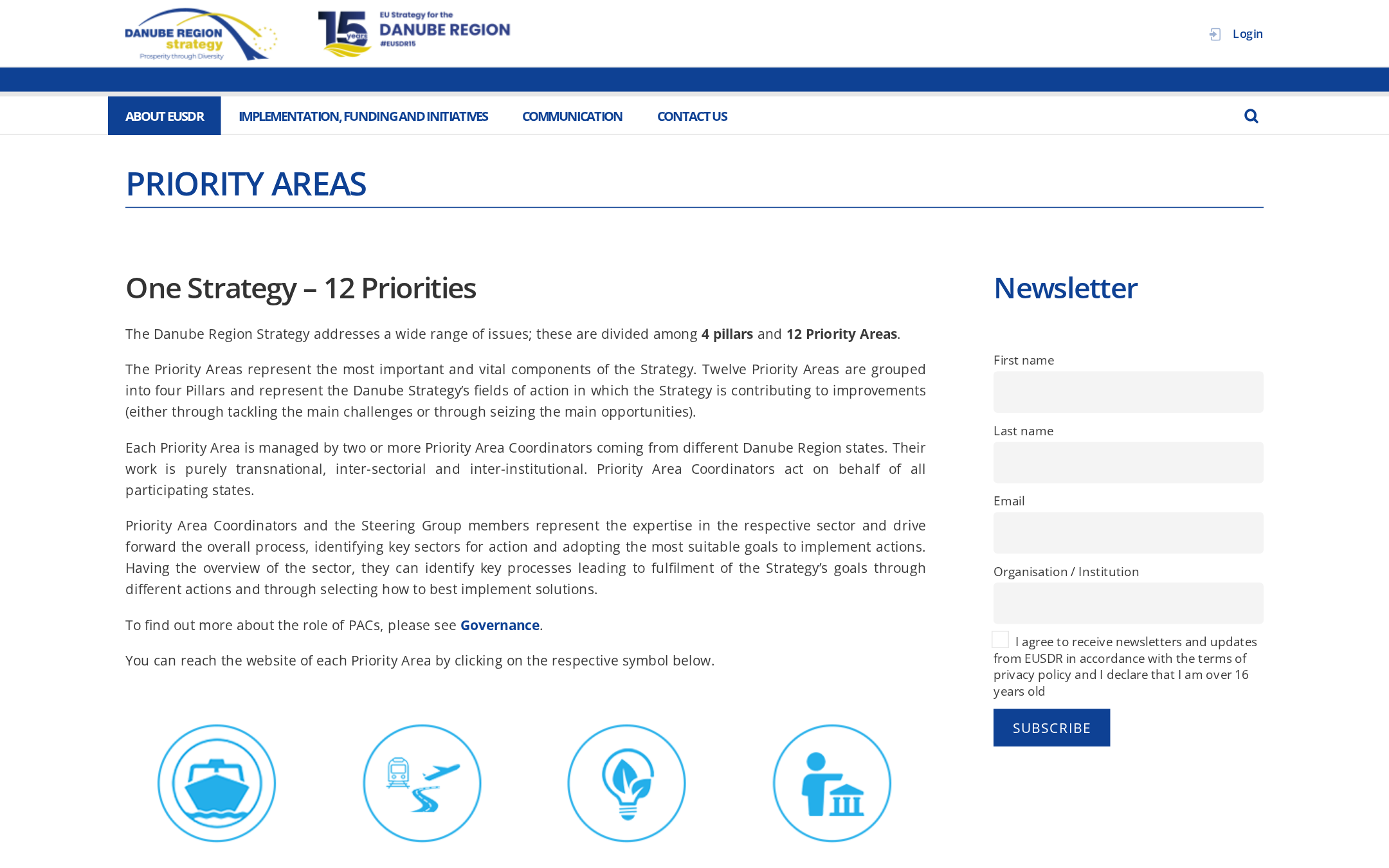
A portal for a macro-regional strategy has two very different readerships. The public is looking for orientation: what it is about, who is responsible, which documents apply. The participating countries and organisations need a place to work together — and one where not every body sees everything.
Both therefore live on the same platform. The public website and the intranet share content and structure; what separates them is a permission system of its own, which decides which country and which organisation may see and edit which areas. The modules this required were developed for it.